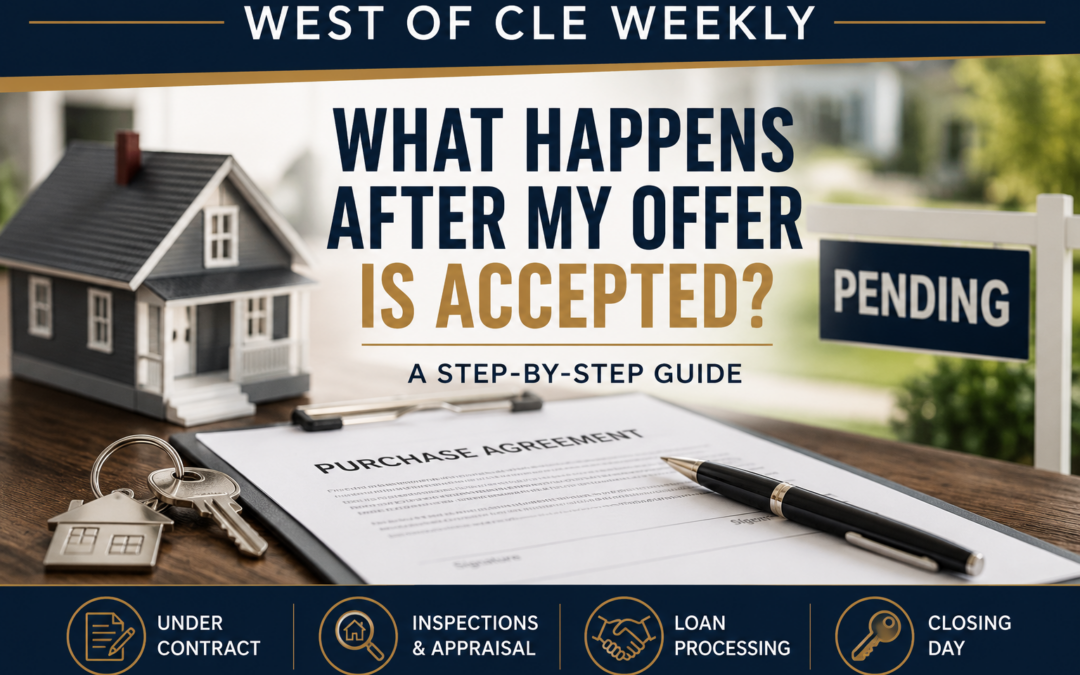
Receiving or accepting an offer is an exciting milestone, but it’s not the finish line. In fact, several important steps take place between an accepted offer and closing day.
Whether you’re buying your first home or selling your current one, understanding what happens next can help reduce stress and make the process feel much more manageable.
Here’s what you can expect after an offer is accepted.
Step 1: The Purchase Agreement Is Finalized
Once both parties have signed the purchase agreement, the home officially goes “under contract.”
The contract outlines important details such as:
- Purchase price
- Earnest money deposit
- Financing terms
- Inspection timelines
- Closing date
- Any agreed-upon contingencies
Your Realtor will help ensure all deadlines are met throughout the transaction.
Step 2: The Earnest Money Deposit
The buyer typically submits an earnest money deposit shortly after the contract is signed.
This deposit demonstrates the buyer’s commitment to purchasing the property and is generally applied toward the buyer’s closing costs or down payment at closing.
Step 3: Schedule the Home Inspection
One of the first major milestones is the home inspection.
A licensed home inspector evaluates the home’s major components, including:
- Roof
- Foundation
- Plumbing
- Electrical
- HVAC system
- Windows and doors
- Appliances
The goal isn’t to find a perfect home—it’s to understand the property’s condition before moving forward.
Step 4: Inspection Negotiations (If Necessary)
After reviewing the inspection report, buyers may request repairs, ask for a credit, or decide to move forward without requesting any changes.
Every transaction is different. Sometimes no additional negotiations are needed, while other times both parties work together to reach a mutually agreeable solution.
Step 5: The Appraisal
If the buyer is financing the purchase, the lender will usually order an appraisal.
The appraiser determines whether the home’s market value supports the purchase price.
This step protects both the lender and the buyer.
Step 6: Loan Processing
During this stage, the lender completes the underwriting process.
The buyer may be asked to provide updated financial documents, employment verification, or additional information before receiving final loan approval.
Promptly responding to lender requests helps keep the transaction on schedule.
Step 7: Title Work
The title company researches the property’s ownership history to confirm there are no outstanding liens or legal issues that could delay the sale.
Title insurance is also prepared to help protect both the buyer and lender after closing.
Step 8: Final Walk-Through
Shortly before closing, buyers complete a final walk-through.
This is an opportunity to confirm:
- Agreed-upon repairs have been completed.
- The property is in substantially the same condition.
- Included appliances and fixtures remain in the home.
It’s not another inspection—it’s simply a final verification before ownership changes hands.
Step 9: Closing Day
Closing day is when all documents are signed, funds are transferred, and ownership officially changes hands.
Both parties review and sign the necessary paperwork, and once everything is complete, the buyer receives the keys to their new home.
Congratulations—you’ve made it!
Final Thoughts
While there are several steps between accepting an offer and closing day, each one plays an important role in protecting both the buyer and seller.
Having an experienced Realtor by your side ensures deadlines are met, questions are answered, and the process stays on track from start to finish.
Whether you’re preparing to buy your first home or getting ready to sell, understanding the process can make the entire experience much less overwhelming.
If you’re planning to buy or sell a home anywhere on Cleveland’s west side, I’d be happy to guide you through every step of the journey.